Should your child say thank you to the AI? Short answer: the machine doesn't need it, your child does
The machine feels nothing, so the please is not for it. But your child is practicing how to speak, and the habits rehearsed with the box are the ones that show up in the playground. The fix is neither forcing nor forbidding, it is one sentence that settles it.
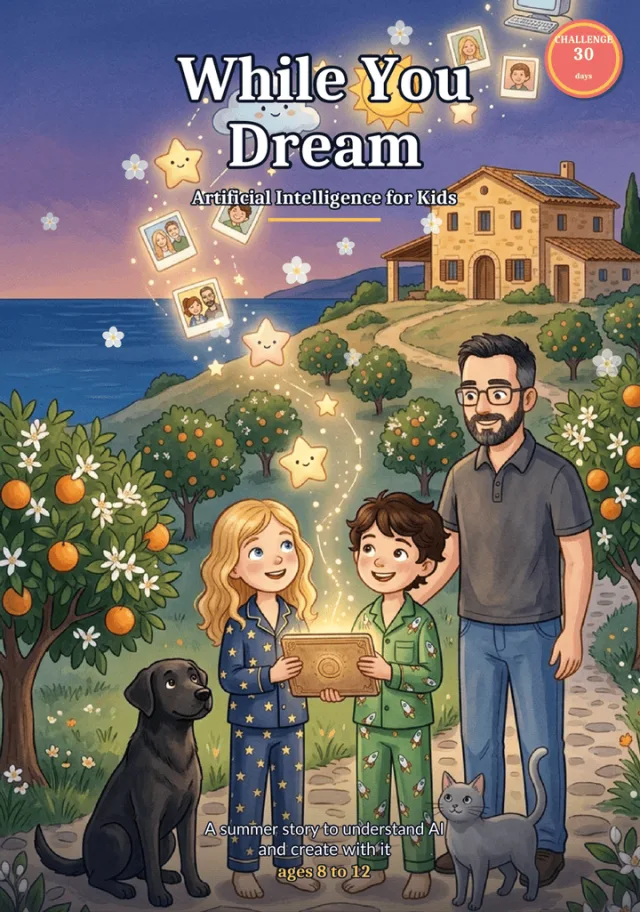 The book behind this articleWhile You Dreamfor children (8 to 12)
 It happens in almost every home with a smart speaker or an AI chat: the child barks an order, play music, and some adult hesitates between correcting them, we say please, and laughing it off, it's just a machine. Both reactions hold a piece of truth, which is exactly why the family debates about this run so long. It is worth thinking through once and picking a position.
What the machine does not need
Start with the clear part: the AI is not offended, not pleased, and holds no grudges. There is nobody inside receiving the thank you. Pretending otherwise, careful, it will get angry, is a bad shortcut: it teaches the child that the machine has feelings, and that false idea is hard to dismantle later, especially when the chat imitates warmth so well.
What your child is practicing
Now the other half: a seven-year-old does not switch registers with an adult's finesse. The way of asking they rehearse a hundred times a day becomes their way of asking, full stop. If the command tone works on the box, it does not stay with the box. That is why politeness toward AI is not for the AI: it is training for the child, just as setting the table is not a favor you do for the plate.
The experiment that turns it into a lesson
With that sentence in place, nobody has to police every please. And the topic makes a great ten-minute experiment: ask the AI for the same thing twice, once curt and once kind, and compare the answers. Sometimes they differ, because the model reacts to the exact wording of the request, and the conversation that follows is the valuable part: it does not answer better because it likes you, it answers differently because you gave it different words. That is the difference between a person and a program, explained with no sermon. If your family enjoys this kind of game, the red pen game points the same way: looking at the machine with an examiner's eyes.
And when they ask if the AI has feelings
The question will come, and the honest answer fits in two sentences: no, it feels nothing, even though it talks as if it did, because it learned from millions of conversations between people who do feel. And that is precisely why we still speak to it politely: not for its sake, but because we are people. Children find this logic surprisingly easy to accept, often faster than adults do.
FAQ
Does the AI answer better if you say please?
It can answer differently, because the model reacts to the full wording of the request, and a kind sentence is a different sentence. But it is not sympathy: there is nobody inside to charm. It makes a great experiment to run with your child.
Is it bad that my child shouts orders at the smart speaker?
Not for the speaker, but for the habit: at that age, the way of asking is fixed through practice, and the tone rehearsed on the machine eventually comes out with people. The useful rule is to speak one way at home, to people and to things.
Should I tell my child the AI gets sad?
Better not: it is false and reinforces exactly the idea worth dismantling, that the machine feels. The honest version works better: it feels nothing, and we are polite anyway because we are people.
Did this article help you?